20 Major Stories Shaping Africa Right Now
From proxy conflicts and energy plays to economic shifts, here is what is happening across the continent and who is pulling the strings.

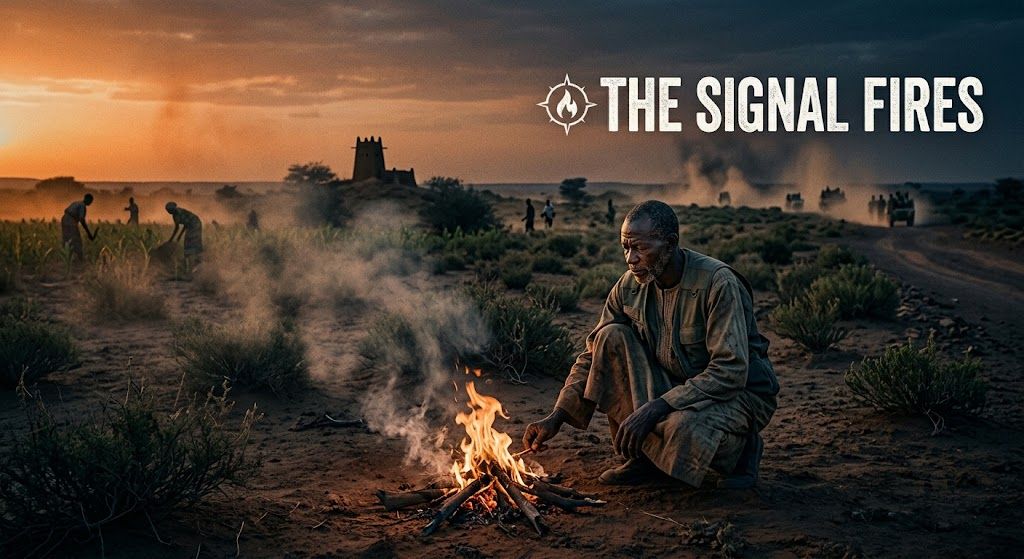
Warning: Critical shifts are underway across Africa, and the consequences will be swift and far-reaching. If you care about stability, security, or future opportunities on the continent, pay attention—this is your early alert. Below are twenty signals that demand immediate awareness as local power plays, foreign interventions, and global markets reshape Africa in real time.
- Sudan (Proxy Warfare): The civil war between the Sudanese Armed Forces (SAF) and the Rapid Support Forces (RSF) has escalated into a regional proxy conflict, with RSF logistical chains drawing arms via Middle Eastern and North African networks while foreign-supplied drones bolster SAF air operations.
- DR Congo (Security & Public Health): In the eastern provinces, M23 insurgents—supported by regional allies—continue to displace thousands and clash with Congolese forces, severely hampering humanitarian access during critical rural health outbreaks.
- The Sahel (Military Alignment): The junta-led coalition of Mali, Burkina Faso, and Niger has completely severed traditional Western security partnerships, expelling French and U.S. forces in favor of security contracts with Russian state-backed units.
- Tunisia (Democratic Backsliding): President Kais Saied’s administration has intensified its judicial crackdown on opposition leaders, independent journalists, and civil society organizers to consolidate executive rule ahead of upcoming political transitions.
- Kenya (Economic Nationalism): Responding to intense economic pressure from young voters over inflation, President William Ruto’s government has enforced strict regulations restricting foreign nationals from operating small-scale informal retail businesses.
- Uganda (Energy Infrastructure): Supported by French giant TotalEnergies and China’s CNOOC, President Yoweri Museveni is moving closer to commercial crude production following progress on the East African Crude Oil Pipeline (EACOP).
- Egypt (Sino-African Integration): Cairo is expanding its strategic alliance with Beijing through multibillion-dollar infrastructure investments in the Suez Canal Economic Zone, anchoring China’s trade footprint in North Africa.
- Horn of Africa (Maritime Friction): Tensions remain high between Mogadishu and Addis Ababa following Ethiopia’s diplomatic push for direct access to the Red Sea via Somaliland, challenging Somalia’s territorial sovereignty.
- Soft Power Expansion (Cultural Diplomacy): Moscow is expanding its geopolitical footprint through the institutional rollout of the Russian Orthodox Church across sub-Saharan Africa, constructing schools and community facilities alongside military agreements.
- Cybersecurity Integration (Digital Enforcement): West and Central African law enforcement bodies are implementing Interpol’s new Nexus digital platform to execute joint regional crackdowns on cross-border financial fraud and cyber syndicates.
- Ghana (Resource Sovereignty): Accra is tightening regulatory controls over its domestic gold sector, mandating local purchasing thresholds to back its domestic currency and prevent capital flight.
- Guinea-Bissau (Constitutional Power): Opposition movements are mobilizing against President Umaro Sissoco Embaló following sweeping constitutional revisions that centralize authority within the executive branch.
- South Africa (Resource & Social Unrest): Government forces face mounting civil unrest in mining corridors as local communities clash with informal, unregulated mining networks operating outside state oversight.
- North Africa Borders (Migration Hotspots): Spanish enclaves Ceuta and Melilla remain central friction points between Moroccan authorities and European border controls amid shifting Mediterranean migration corridors.
- Zimbabwe (Informal Economy Crackdowns): Municipal forces are aggressively clearing informal urban marketplaces to collect tax revenue, sparking widespread vendor demonstrations across Harare.
- Alliance of Sahelian States (Blockades & Food Security): Armed insurgent blockades along major transit corridors in the Sahel are obstructing agricultural trade, triggering acute food insecurity across rural hubs.
- South Africa (Apartheid-Era Accountability): Legal collectives representing Apartheid victims are bringing landmark class-action litigation against state institutions, challenging long-standing prosecutorial immunity policies.
- West Africa Cocoa (Climate & Supply Chains): Extreme weather patterns and changing rainfall cycles across Côte d’Ivoire and Ghana are causing historic crop yield declines, sending global cocoa prices soaring.
- Nigeria (Institutional Restructuring): Abuja is conducting internal purges across its security apparatus and anti-corruption agencies to rebuild institutional integrity and restore foreign investor confidence.
- Economic Integration (AfCFTA Implementation): Member states of the African Continental Free Trade Area are rolling out unified customs protocols to accelerate intra-African supply chains and insulate regional markets from global disruptions.
The Analytical Breakdown
Across these twenty distinct developments, two overarching structural forces bind the continent’s trajectory: the rapid reconfiguration of foreign influence and the struggle for state resource sovereignty. As traditional Western security frameworks recede—most visibly in the Sahel—global powers like Russia and China, alongside middle-tier players like the UAE and Turkey, are filling the void through military partnerships, infrastructure deals, and soft-power expansion. This global competition directly fuels internal geopolitical flashpoints, as seen in Sudan’s proxy battle networks or the diplomatic friction surrounding Ethiopia’s Red Sea access, demonstrating how external power dynamics amplify regional instability.
At the same time, African states are actively attempting to reclaim economic agency to insulate themselves against global volatility and domestic unrest. From Ghana restricting gold exports and Uganda launching its major energy corridor to Kenya asserting protections for local market vendors, leaders are shifting away from passive raw-material extraction toward aggressive resource nationalism and regional integration via the African Continental Free Trade Area. However, this push for control is unfolding against a backdrop of acute environmental shocks, food insecurity, and civil friction, forcing governments to constantly balance long-term strategic independence with immediate political survival.
The warning is clear: these are not isolated events, nor are they solely driven by local actors. External powers—including China, Russia, and the USA—are actively fueling and exploiting these developments. If you’re still viewing Africa through a North American lens, you’re missing the signal. The time to engage, question, and act is now.
-Devon Levack
I hope you enjoyed the article, as Dark as it was, but necessary
Please leave me a comment. Challenge me, and let’s have a productive discussion.
To contribute to my Free Writing, you can use my Ko-Fi link below to buy me a coffee. I really do not want to put this behind a paywall. I have always been an open-source person and contribute every year to Wikimedia, aka Wikipedia, to support free, unbiased information against media Billionaires trying to dictate the narrative.