Beyond the Silence (Part 2)
Series: Beyond the Silence — Unlocking the 400-Year Gap, Lost Books, and Memories of the Pre-Flood World (Part II)

In Part 1, we traced how pre-Flood history crossed the Deluge and why the 400-year gap between Malachi and Matthew became the ultimate historical pressure cooker where scribes wrote down the records of their survival.
Now we turn to the direct consequence of those 400 years: What were those missing books, why do different Christian traditions treat them differently today, and how did that exact 400-year window build the high-speed infrastructure for Jesus and the apostles to spread the Gospel across three continents?
1. The 14 Books of the Gap: A Situation-Action-Result Breakdown
When the original King James Bible was published in 1611, it did not contain 66 books—it contained 80 books. Tucked directly between the Old and New Testaments was a section titled the Apocrypha, containing 14 books written during that crucial 400-year window.
  100+ EARLY SCROLLS & VISIONS (1st - 3rd Century AD)
       │
       ├──► ETHIOPIC CANON: Preserved ~81–84 Books (Kept Enoch & Jubilees)
       ├──► CATHOLIC CANON: Council of Trent confirmed 73 Books (Kept 7 Gap Books)
       └──► PROTESTANT CANON: Trimmed to 66 Books (1800s printers removed the 14 Gap Books)
The Historical & Political Chronicles
1 Maccabees
- Situation: The Seleucid king Antiochus IV outlaws the Torah, desecrates the Temple, and mandates pagan worship under pain of death.
- Action: Judas Maccabeus and his brothers launch an armed guerrilla war, defeat the Syrian army, and cleanse the Jerusalem altar in 164 BC.
- Result: Restores an independent Jewish kingdom (the Hasmonean Dynasty) and establishes the historical foundation for Hanukkah (celebrated by Jesus in John 10:22).
2 Maccabees
- Situation: Faithful Jewish citizens face brutal public torture and execution for refusing to break God’s covenant.
- Action: Scribes document the theological struggle, capturing the accounts of martyrs and military leaders under persecution.
- Result: Formulates explicit theological statements on the bodily resurrection, martyrdom, and making offerings for the deceased.
1 Esdras & 2 Esdras
- Situation: Jewish exiles face deep psychological trauma following temple destructions and imperial oppression under Persia and Rome.
- Action: Authors record visions of end-times judgment, divine justice, and the coming Davidic Messiah.
- Result: Shaped medieval European theology regarding apocalyptic timelines and cosmic restoration.
The Wisdom Literature & Moral Narratives
Tobit & Judith
- Situation: Jewish believers living under foreign exile face extreme social isolation, military sieges, and religious persecution.
- Action: Narrative accounts were written detailing covert deliverances—Judith beheading the invading general Holofernes; Tobit guided by the Archangel Raphael.
- Result: Provided models of personal piety, prayer, and courage in the face of hostile foreign empires.
Wisdom of Solomon & Sirach (Ecclesiasticus)
- Situation: Hellenistic philosophy was convincing young Jews that ancient Hebrew scripture was intellectually primitive.
- Action: Jewish scholars compiled massive manuals of ethics, practical proverbs, and philosophical defenses of the Law.
- Result: Sirach became the primary ethical textbook in early Christian instruction (earning the title Ecclesiasticus, meaning “Church Book”).
Additions to Prophetic Texts
Additions to Esther & Daniel (Azariah, Susanna, Bel & Dragon)
- Situation: Greek-speaking Jewish readers felt earlier Hebrew accounts lacked explicit devotional prayers or clear courtroom defenses against idol worship.
- Action: Translators expanded the Greek Septuagint texts with prayers inside the fiery furnace and narrative proofs exposing corrupt pagan priests.
- Result: Reinforced Daniel’s standing as an unyielding defender of monotheism against state-mandated idolatry.
Baruch, Letter of Jeremiah, & Prayer of Manasseh
- Situation: The global Jewish diaspora needed liturgical models of national repentance while living dispersed among pagan nations.
- Action: Scribes composed penitential prayers and sharp polemics demonstrating the powerlessness of carved idols.
- Result: Provided standardized liturgical prayers used across synagogues in the Mediterranean world.
2. How the 400 Years Divided Modern Christianity
The events and writings of these 400 years created a direct theological fault line that shapes how modern Christians read their Bibles today.
In 2 Maccabees 12:42–45, Judas Maccabeus collects money from his troops to send to Jerusalem as a sin offering for fallen soldiers discovered with pagan amulets under their tunics—praying that their post-mortem sin would be blotted out.
  DEUTERONOMY 18 / HEBREWS 9 ──► Explicitly forbids consulting/praying regarding the dead
              ▲
              │ (Direct Theological Contradiction)
              ▼
    2 MACCABEES 12:42–45    ──► Records prayer and sin offerings for deceased soldiers
In the 1500s, the Catholic Church utilized 2 Maccabees to justify the doctrine of Purgatory and the sale of indulgences. When Martin Luther and Protestant reformers evaluated the Apocrypha, they tested it against the foundational Old Testament Law:
- Deuteronomy 18:10–12: Explicitly bans consulting or dealing with the dead.
- Hebrews 9:27: Declares that human beings die once, and after that faces judgment.
The Reformers concluded that while these books contained vital history, any text contradicting the foundational Law could not be held as inspired scripture. Protestant publishers moved the 14 books to an appendix between the Testaments. By the 1800s, commercial Bible societies dropped the section entirely to save printing costs, creating the 66-book Protestant canon most people use today.
Meanwhile, ancient eastern traditions took completely different paths because they were outside Western Rome’s jurisdiction:
- Ethiopian Orthodox Church: Retained 81 to 84 books, keeping Enoch, Jubilees, and Maccabees in their Bible.
- Eastern Orthodox Church: Preserved 76+ books, keeping 3 & 4 Maccabees and Psalm 151.
3. The Providential Setup: How the 400-Year Window Built the Gospel Infrastructure
While scribes were documenting their history and suffering during those 400 years, God was using both imperial conquests and Jewish innovation to construct the ultimate delivery system for the Gospel. When Paul wrote that Jesus arrived “in the fullness of time” (Galatians 4:4), he was pointing directly to the infrastructure built during this four-century gap.
THE 400-YEAR INFRASTRUCTURE MATRIX:
┌──────────────────────────┬────────────────────────────────────────────────────────┐
│ 1. The Septuagint (LXX)  │ Greek translation of the OT — the Bible Paul quoted    │
│ 2. The Synagogue System  │ Intertestamental local hubs — Paul's instant launchpad  │
│ 3. The Diaspora Network  │ Jewish communities established in every major city     │
│ 4. Koine Greek           │ Common language across 3 continents (Alexander)        │
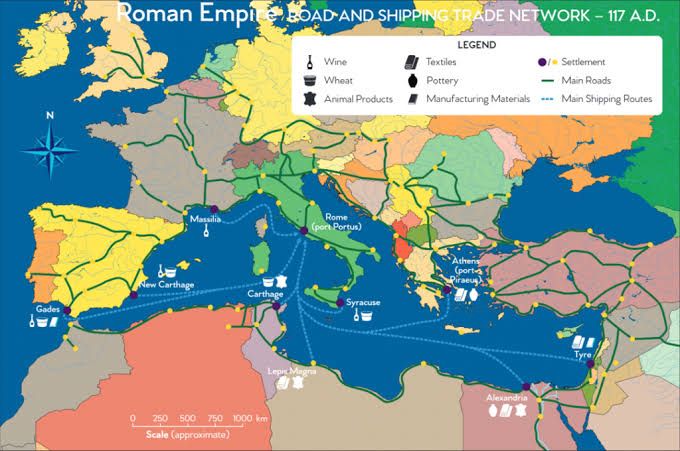
│ 5. Pax Romana & Highways  │ 50,000 miles of paved roads & safe sea travel (Rome)   │
└──────────────────────────┴────────────────────────────────────────────────────────┘
A. The Literary Engine: The Septuagint (LXX, c. 250 BC)
During the 400-year window in Alexandria, Egypt, Jewish scholars translated the Hebrew Scriptures into Greek. Known as the Septuagint (LXX), this was the exact Bible Jesus and the New Testament writers quoted. When the apostles traveled the Greco-Roman world, they didn’t have to translate Hebrew on the fly; the Gentiles and Greek-speaking Jews already had an accessible, authoritative scripture in their native language.
B. The Local Launchpad: The Rise of the Synagogue
When Antiochus IV desecrated the Jerusalem Temple in 167 BC, public Temple worship came to a halt. In response, Jewish communities across the world developed the synagogue system—local centers for teaching, prayer, and scripture reading. When Paul entered any new city (from Antioch to Thessalonica to Corinth), his strategy was identical: walk into the local synagogue on the Sabbath and preach Jesus as the fulfillment of the Torah (Acts 17:1–2). The 400-year gap created those pulpits.
C. The Network: The Jewish Diaspora
Over those four centuries of geopolitical displacement, millions of Jews settled throughout the Mediterranean basin while keeping their theological identity intact. This created built-in, hospitable landing pads for early Christian missionaries in every major urban hub of the Roman Empire.
D. Imperial Software & Hardware: Koine Greek & Roman Highways
- Greece Provided the Software: Alexander the Great’s conquest unified the Mediterranean under a single common dialect (Koine Greek). An apostle could walk from Jerusalem to Athens to Rome and preach in a language everyone understood.
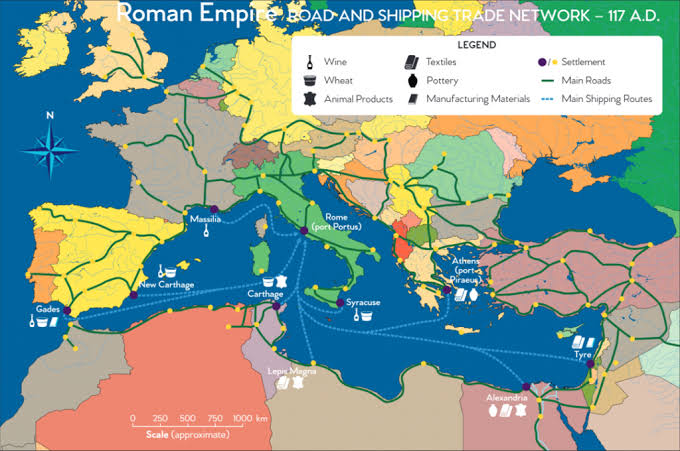
- Rome Provided the Hardware: When Rome conquered the region in 63 BC, it established the Pax Romana, cleared the Mediterranean Sea of pirates, and paved over 50,000 miles of stone highways (Via Appia, Via Egnatia).
4. Unprecedented Velocity: How Travel Infrastructure Ignited the Early Church
Before these four centuries, the ancient world was a fractured maze of local currencies, shifting border permits, regional dialects, and rampant sea piracy. Moving a message across three continents would have taken decades—if the travelers survived at all.
By the 1st century, the 400-year window had forged a single, high-speed travel ecosystem that enabled the apostles to spread the Gospel with incredible speed.
BEFORE THE 400-YEAR GAP             AFTER THE 400-YEAR GAP (1st Century)
───────────────────────             ───────────────────────────────────
• Hostile, closed tribal borders    • Open transit under Pax Romana
• Regional dialects & translation   • Universal Koine Greek
• Sea piracy & lawless routes       • Roman Navy clears shipping lanes
• Months of dangerous travel        • Rapid travel: Jerusalem to Rome in weeks
- Uninterrupted Borderless Travel: Under the Pax Romana (forged during Rome’s takeover in 63 BC), international borders were unified under a single legal authority. A missionary like Paul could travel over 10,000 miles across Judea, Asia Minor, Greece, and Italy without applying for foreign visas, exchanging currencies at every border, or facing militarized checkpoints.
- Safe Sea Lanes: For centuries, Mediterranean shipping was paralyzed by Cilician pirates. In 67 BC, Rome deployed massive naval fleets to systematically clear the seas. By the 1st century, grain ships and passenger vessels moved freely, allowing missionaries to cross from Caesarea to Rome in weeks rather than months.
- The Built-In Relay Network: Because of the intertestamental Diaspora, Jewish synagogues were established every 15 to 20 miles along major Roman highways. These acted as built-in network nodes—providing safe lodging, immediate audiences, and travel information at every single stop.
5. The General Who Stepped Behind the Veil (63 BC)
Right at the climax of Rome’s expansion during this 400-year window, one of history’s most extraordinary encounters took place inside Jerusalem.
In 63 BC, the famous Roman general Pompey the Great conquered Jerusalem following a three-month siege. In every pagan culture Pompey had conquered—from Greece to Asia Minor—temples housed massive, towering stone or golden statues of their gods. Rumors had reached Rome that the Jews worshipped a God who had no physical image.
Driven by sheer awe, shock, and curiosity, General Pompey marched up the Temple Mount, brushed past the trembling priests, and shoved aside the heavy embroidered curtain into the Holy of Holies—a sanctuary no human was permitted to enter except the High Priest once a year on Yom Kippur.
When Pompey pulled back the veil, expecting to shock his men with a hidden golden idol or bizarre relic, he stopped dead in his tracks.
The room was totally, completely empty.
The Ark of the Covenant had vanished centuries earlier during the Babylonian exile. There was no physical statue, no carving, no gold figure. Yet Roman accounts and Jewish records (like Josephus) note the lingering weight of that moment: Pompey stepped out of the darkness of that sanctuary shaken by a heavy, invisible presence he couldn’t explain.
Roman soldiers typically looted every temple they conquered, stripping gold altars and raiding sacred treasuries. But Pompey was so unnerved that he refused to touch a single piece of gold or loot a single silver coin. The very next morning, he issued a command ordering his troops to clear out, instructed that the Temple be cleansed of ritual defilement, and demanded that the Jewish priests resume their daily offerings undisturbed.
Rome built the roads, Alexander provided the language, and the intertestamental Jews built the synagogues—setting the exact stage for the Gospel to explode across three continents in a single generation.
Thesis & Reader Challenge
The 66-book Protestant Bible you hold today is not the result of a single leather-bound book falling out of the sky—it is the direct outcome of historical wars, theological testing, and publishing choices rooted in the 400-year gap. Books like 1 & 2 Maccabees document gritty, undeniable history, while the political developments of those four centuries built the high-speed roads and language the apostles used to transform the world. When you understand these 400 years, you stop viewing Scripture through self-serving assumptions and start seeing the Sovereign God who moves through real history.
The facts are on the table. Drop your thoughts in the comments: Does knowing the political, theological, and historical reasons why these 14 books were shifted change how you view your Bible today?
Primary References & Academic Authorities (Part 2)
Ancient Manuscripts & Primary Sources:
Codex Sinaiticus & Codex Alexandrinus (4th–5th Century AD) – Complete Greek Septuagint codices containing the Apocrypha alongside Old and New Testament books (British Library).
1611 King James Bible (First Edition) – Original printing including the 14-book Apocrypha section bound between Malachi and Matthew.
Josephus, Flavius. The Antiquities of the Jews (Book XIV, Chapter 4). Transl. by William Whiston. (Primary 1st-century historical record of Pompey entering the Holy of Holies in 63 BC).
Tacitus. Histories (Book V, Chapter 9). (Roman historian recording Pompey finding the shrine empty).
Academic References:
Bruce, F.F. The Canon of Scripture. InterVarsity Press, 1988.
Metzger, Bruce M. An Introduction to the Apocrypha. Oxford University Press, 1957.
Smallwood, E. Mary. The Jews Under Roman Rule: From Pompey to Diocletian. Brill, 2001.