Like Ice Cream on a Sunday
A Post-Mortem on the Loss of Family Architecture and the Rise of Modern Neglect

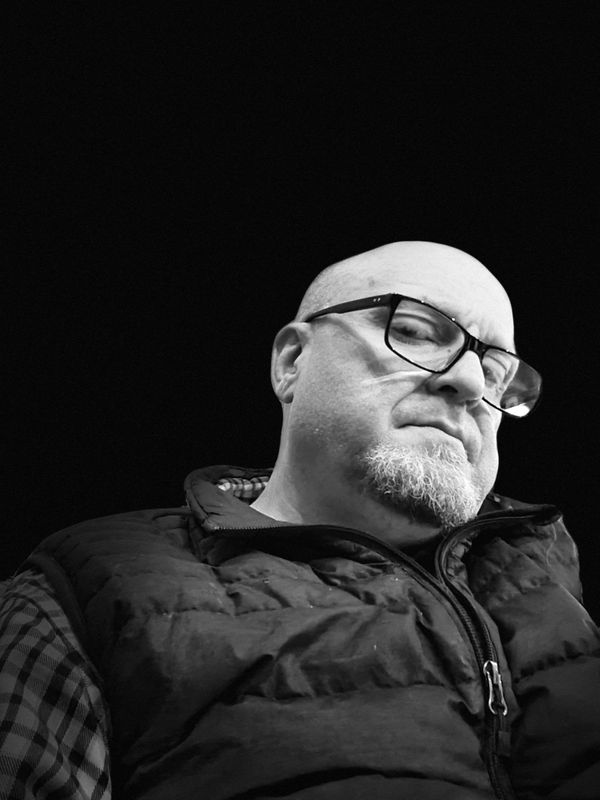
By Devon Douglas Levack
In the 1970s and ’80s, family life in Truro, Nova Scotia, had a reliable, rhythmic cadence to it. It was built on a structured grouping that anchored everyone within it. Sundays were the peak of this architecture. It began with the morning ritual of church, followed by a drive out to Fundy Lane or the local Dairy Queen for big scoops of ice cream. By 4:00 PM, the day culminated at my grandparents’ house, where the air was thick with the smell of a roast chicken dinner.
The undisputed pillar of this world was my grandfather—a man who had fed troops on the front lines of World War II, a hardened, disciplined provider who stood as the family’s mental and physical anchor. The worries of the world were held firmly at bay purely by the rock-solid, sober strength of that traditional family structure. On the surface, the process worked perfectly.
My mother, my two sisters, and I were living in poverty, yet we were protected by the sheer mass of this extended family unit. Families did things together back then. They went on picnics; they utilized their days off to group tightly around one another. Because the unit was so cohesive, it acted as a natural human shock absorber for the complex, brilliant minds within it.
My uncle Robert was a testament to the raw human brilliance that existed within this ecosystem, and a tragic casualty of its limitations. By any metric, Robert possessed a superhuman capacity to create. He was a master carpenter whose grades in draftsmanship were flawless. He was entirely self-taught on the guitar and piano, a songwriter, and a natural inventor who patented a convertible shoe-to-slipper design in the 1980s.
His intellect was matched by a fierce, protective generosity. When times were tightest for my mother, Robert would suddenly appear, dumping heavy bags of groceries onto our kitchen table. He would drive by to take me out for Chinese food, shielding me from the noise of the world. In my presence, the chaotic noise in his mind went quiet.
I watched his genius firsthand the summer my grandparents went across the water to Prince Edward Island for a week. My grandmother Vivian had offhandedly mentioned wishing her kitchen was larger and had bay windows. Robert didn’t wait for a crew. We drove to Beaver Lumber and Home Hardware in Truro, loaded up materials, and Robert went to work completely solo. With a sledgehammer, a measuring tape, and absolute mathematical precision, he smashed out the front and back walls of the house. In three days flat, he framed, rebuilt, insulated, and painted a flawless new kitchen featuring a front bay window, a deep back bay window, and a platform for plants built directly into the house. It was immaculate work, executed by a single, high-powered mind through sheer force of will.
But a mind that fires with that level of intensity carries a massive biological load. Robert was fighting severe schizophrenia. Because our family group was tight, we absorbed the weight of his crisis for as long as humanly possible. But outside our front door, the institutional infrastructure was barbaric. When Robert reached a breaking point and pleaded for his soul, the dominant cultural institutions panicked; the church called the police on him, leading to the primitive, destructive confinement methods of the era. He ultimately committed suicide at age 32.
But Robert’s path was already carved out by the generation before him. My other uncle, Jackie, was completely swallowed by that exact same institutional system. He was put into an institution at just 17 years old, and he remained confined behind those walls for his entire life until he died at age 86. Sixty-nine years of a human life were spent inside a rigid, fearful system. The old system had heavy physical walls, and its tools were fearful and crude.
Carrying the weight of that hereditary timeline, I stepped into my own adult life with a silent, terrifying “cap” over my head. I excelled scholastically, winning the Governor General’s Academic Medal and the Bank of Montreal award, and launched a successful career as a project manager and business analyst. In 1991, I married Tanya, a Ukrainian woman whom I met at Sheridan College and loved immensely.
But the invisible tax of living in constant hyper-vigilance—running on panic-fueled adrenaline while waiting for a biological clock to strike age 32—bleeds heavily into a person’s personal life. This is the absolute human cost of survival mode. The internal volatility of trying to outrun a family ghost drives self-destructive choices. Despite my deep love for Tanya, I fractured that relationship, engaging in infidelities that tore at the fabric of our life. We went through years of upheaval together until the marriage finally ended as I hit that exact 32-year deadline.
Even as the papers were being finalized in 2002, the human cost kept multiplying. Tanya went on a trip to Southeast Asia, became pregnant, and found herself in Kuala Lumpur. The instinct to protect family didn’t vanish; I immediately intervened, sending money and flying her back to Calgary, Alberta, ensuring the child would be born on Canadian soil. When I met her at the airport with my girlfriend at the time, Megan, Tanya handed the child over right away, spending the time talking to Megan—the two women were remarkably alike. Yet my heart bled entirely for Tanya. Shortly after, in 2003, I discovered Megan had cheated on me. The cycle came full circle. My personal world shattered at the exact age my Uncle Robert’s did, and I have been without companionship for over two decades since.
When the survival engine finally blew its fuse from decades of hyper-vigilance, my mind slowed down. I dropped out of the workforce for 16 years. And it is here that the modern medical system committed its greatest act of process failure.
Because we have lost the grouping of the family in modern culture—because those Sunday ice cream trips and picnics have been replaced by isolated individuals operating on separate loops—there was no tight-knit family unit to stand in the gap and advocate for me. The burden of care had been entirely outsourced to a volume-based medical checklist.
For 14 years, I experienced severe, chronic physical blood loss. I hounded doctors, showing them photographic evidence of the constant bleeding, but the system refused to run foundational diagnostic tests. Instead, looking at my trauma history and cognitive slowdown, they defaulted to the easiest, cheapest corporate workaround: they labeled the issue as PTSD and OCD, treating the surface behavioral symptoms with high volumes of psychiatric medication, and walked away. They painted over the dashboard warning lights while the engine was actively starving for fuel.
By August 2025, my body had reached a hard constraint. I required three emergency blood transfusions because my hemoglobin and red blood cells were so depleted that my body was rationing oxygen strictly for my core organs, leaving my brain functioning in a slow, survival-mode fog.
Nine weeks ago, the physical surgery was finally performed. The bleeding stopped. The oxygen returned. Today, at 57 years old, my analytical processing power has returned in a sudden, undeniable flood. My mind is sharp, working with a burst of clarity that is pouring directly into my writing.
But the failure of the clinical system is only half the diagnosis. The rot goes far deeper into the community itself, hidden behind the persistent, ugly stigma surrounding mental illness to this day.
When you slip beneath the floorboards of the workforce, you don’t just lose an older family architecture that may not understand these complex psychological concepts—you lose your peers. You lose your friends. When the medical industry slaps a label on you, the people you came up with suddenly look at you through a single, critical point of view. They refuse to look any deeper, and they refuse to even attempt to help. They treat your struggle as if it were a contagious stigma that might rub off on their own reputations.
When I moved back from Calgary to Ontario, I reached out to my own peer group. These were people I had known for years. They had ascended into significant positions of power—Vice Presidents and Directors at large corporations. They were individuals for whom I would have gladly, without hesitation, opened doors and pounded the pavement to help find a job had they moved out west.
But when I asked them for a simple foothold—not for the world, just for a baseline job, an entry point to work and rebuild—not a single person stood up.
These corporate executives, many of whom claim to be Christians and talk openly about the values of care and service, completely outsourced their own humanity to a risk-assessment spreadsheet. They didn’t see a human being with a high intellect who could bring immense value to their organizations, regardless of the position. They just saw a “liability.” They were terrified that if they advocated for me and I failed, it would tarnish their professional standing. They chose corporate self-preservation over basic human loyalty. They never gave me a chance to succeed; they simply judged me from a distance without ever asking a single question.
For them, I feel a profound sense of pity. They have lost their humanity. They have traded the actual, messy work of caring for a brother in arms for the sterile safety of a corporate checklist.
Even during those dark years of profound iron and oxygen depletion, my cognitive engine was still firing. I was fully capable of working, of contributing, of executing the tasks put in front of me. I proved it daily. But when your community and your peers view you strictly through the distorted lens of a medical label, they become completely blind to the reality of who you are.
As an analyst, I look at the results of this post-mortem and see a devastating cultural truth.
We are told that our modern mental health industry is advanced and compassionate, but a root-cause analysis proves otherwise. We have simply traded the physical walls of the 1970s asylums for the chemical walls of modern medical neglect and the social walls of corporate stigma. Fifty years ago, the system was barbaric, but the family group was there to protect its own. Today, the family grouping has dissolved, and the modern medical system has zero structure. It is far easier for a clinic to hand an isolated individual a heavy bottle of pills, and far safer for high-level “friends” to lock them away in a box of permanent liability, than it is to look at the data, see the human being, and extend a hand.
Re-entering the corporate workforce after 16 years outside of it is a daunting, heavy prospect filled with a deep sense of loss for the time that was stolen from me by negligent systems and cowardly peers. But while the path forward is uncertain, my voice is fully online. I am using my analytical lens to write the data down, document the good, the bad, and the ugly, and light this signal fire. If you are one of the executives who looked at me and chose your spreadsheet over your conscience, know this: you didn’t protect your record; you just proved that when society outsources its humanity to cold checklists, it is the souls of the healthy that rot first.
We must stop painting over the dashboard warnings, and we must realize that when we lost the grouping of the family and the courage of our friends, we lost our most critical lines of defense.