
The Electrolyte Illusion: Medicine vs. Modern Marketing
Medicine in a Bottle? Why Most Hydration Drinks are Actually Just Soda


Preface: The hydration industry uses deceptive, trademarked terms like "Cellular Transport Technology" to rebrand high-sugar drinks as necessary health products. This investigation reveals that many popular sports drinks function as sugar traps, providing unnecessary calories for sedentary consumers while exploiting the "athletic halo" effect.
Close to My Heart
“I was an athlete, a sprinter, tennis player, mountain biker, hiker, and downhill skier for 20+ years. High altitudes and thin, dry air lead to dehydration. Even in semi-arid lands, I got severely dehydrated even after prehydrating. So I know IV drips very well; the cheap, fake hydration drinks would do practically nothing to help me. I was exhausted after running back to find my map in YoHo Valley. I did 4 km in 30 minutes. When I got back to the group, I was drinking everyone's water just so I wouldn't pass out. Damn, I wish we had salt packets. Ended up Air Evac out of the Valley, not knowing how close I was to death.” -Devon Levack YOHO Ridge and Bridge to the Glaciers c1999
The rehydration industry is a $40 billion global giant built on a seductive lie: that modern life is an endurance event requiring “advanced technology” just to survive a morning commute. By wrapping sugary beverages in the “athletic halo” of professional sports, brands have successfully rebranded liquid candy as a health requirement, fueling a quiet obesity crisis.
Debunking “Cellular Transport Technology” (CTT)
Marketing teams at premium brands use trademarked buzzwords like “Cellular Transport Technology” to make their products sound like proprietary medical breakthroughs.
- The Reality: There is no “CTT” in medical textbooks. It is a marketing term for Oral Rehydration Therapy (ORT), a non-proprietary protocol discovered in the 1940s and refined in the 1960s to treat severe dehydration.
- The Scientific Mechanism: It relies on the sodium-glucose cotransport system. When sodium and glucose enter the small intestine in a specific ratio, they activate cellular “pumps” that pull water into the bloodstream faster than plain water.
- The Deception: While these brands claim to follow World Health Organization (WHO) standards, many fail clinical tests. A true medical Oral Rehydration Solution (ORS) is a precisely balanced mixture; for instance, some “wellness” sticks contain nearly twice the sugar and significantly less sodium than the WHO formula (which requires 2.6g sodium and 13.5g glucose per liter).
The Obesity Trap: Drinking Your Calories
The biggest danger in the hydration aisle is the consumption of sports drinks by sedentary people—specifically children who are influenced by athletic imagery but don’t need the extra calories.
- Premeditated Obesity: Consumption of sugar-sweetened sports drinks is directly associated with overweight and obesity in children and adolescents.
- “PET Bottle Syndrome”: Constant consumption of sugary drinks can lead to a dangerous cycle: high sugar intake causes thirst, leading the consumer to reach for another sugary drink. This can result in insulin resistance and metabolic issues.
- The Soda Comparison: Standard sports drinks are essentially flavoured water with high carbohydrate content, similar to soft drinks. A 32-ounce bottle can contain over 50 grams of sugar. If you aren’t currently on a field performing 60+ minutes of high-intensity exercise, this is just extra fuel being stored as fat.
Medical Reality vs. Beverage Marketing
Regulatory bodies are beginning to push back against these deceptive practices.
- Regulatory Crackdowns: India’s food regulator (FSSAI) recently banned the use of the term “ORS” on any beverage label unless it strictly complies with WHO medical formulations, labelling such branding as “false, deceptive, and misleading”.
- Ineffectiveness for Illness: Using a sugary sports drink when medical rehydration is needed can actually worsen dehydration by pulling more water into the gut and exacerbating diarrhea.
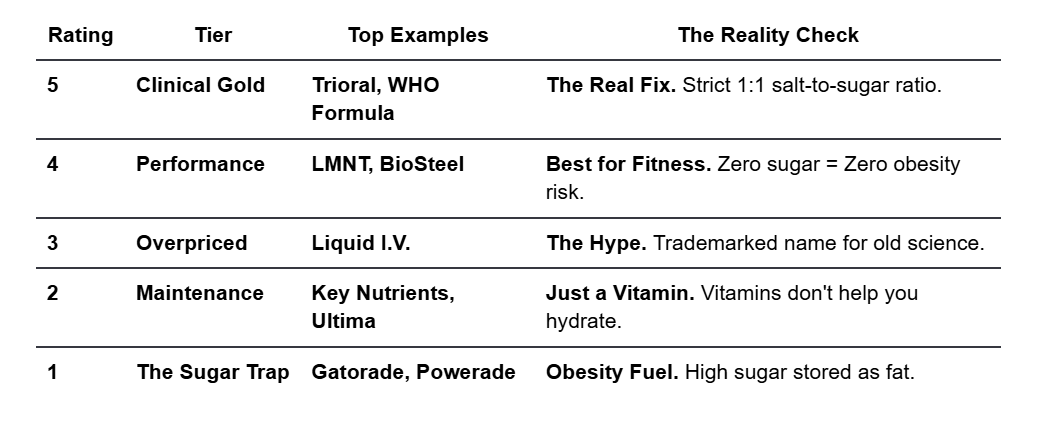
The Signal Fires Hydration Truth Scale
Rating your drink based on clinical effectiveness vs. the risk of unnecessary weight gain.
Actionable Takeaway
We’ve been conditioned to trust the “athletic halo” and the scientific buzzwords. But the numbers don’t lie—most of this is just high-priced obesity fuel. Are you ready to stop paying the corporate tax on water? Let’s talk.
Medical Disclaimer: The information presented in this article is for educational and informational purposes only and is not intended as medical advice, diagnosis, or treatment. The “Signal Fires Hydration Rating Scale” is an independent analysis of commercial and clinical products based on publicly available data and standards, not a clinical recommendation. Always consult with a qualified healthcare professional before changing your diet, exercise routine, or using any rehydration products for medical conditions, especially if you are managing severe dehydration or chronic illness.